The MISSOULA PROJECT
Conversations on Cummunity & Change
Research Turned Podcast
THE SILENT NO MORE PODCAST
TRANSLATING SCIENCE INTO UNDERSTANDING
Silent No More is a podcast I created to explain why harm often goes unreported and how systems, language, and institutional responses influence whether people feel safe speaking up. While rooted in research, the goal is practical clarity: helping listeners understand the forces that shape silence and how those forces can be changed.
FROM RESEARCH TO PUBLIC CONVERSATION
My work on Silent No More grew out of academic research on sexual violence and underreporting, including my close study of Missoula. That research helped me understand patterns. The podcast became a way to explain those patterns out loud, in real language, to people who may never read an academic text.
PODCAST APPROACH
Rather than analyzing individual cases, Silent No More focuses on how reporting environments are shaped and why clarity, consistency, and trust matter long before harm occurs.
Each episode is structured around one core question. I define key terms, explain relevant research, and connect findings to real-world situations students recognize. I pay close attention to tone and pacing to avoid sensationalism while still addressing difficult material honestly.
The intended audience is high school and college students who want information without judgment, oversimplification, or blame.
WHY THIS PODCAST EXISTS
Silent No More is grounded in the belief that information changes behavior. When people understand how systems work, they are better equipped to navigate them, challenge them, or redesign them.
This project taught me that research is only as powerful as its ability to be understood. Silent No More strengthened my interest in using clear communication as a tool for prevention and systems-level change.
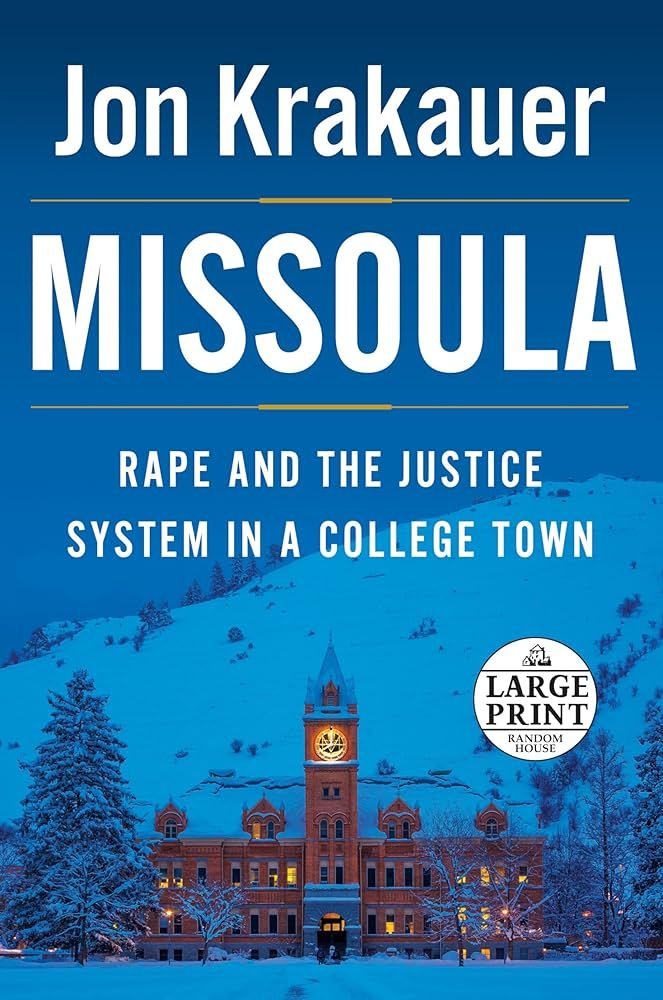
MISSOULA
The book behind the podcast
I recently read Missoula, a book that examines sexual assault and the justice system in a college town. It had a huge impact on me, and it inspired me to create a podcast concept called Silent No More. My goal was to highlight how often harm goes unreported and how much institutional responses influence whether people feel safe speaking up.
What stood out to me in Missoula was that harm isn’t defined only by the incident itself but is also shaped by the systems people have to move through afterward. Reporting isn’t a simple choice. It is a calculation about safety, credibility, and the consequences of coming forward. I was surprised how often survivors were expected to prove themselves while institutions focused on protecting their own image. The question wasn’t always “What happened?” but instead, “Are you sure?” Doubt and delay didn’t always come from cruelty; sometimes they came from hesitation, confusion, or a desire to avoid discomfort. But the impact was the same, which was that people felt unheard. I realized that silence often comes not from fear of the truth, but from fear of how others will respond.
Before reading the book, I thought of reporting as a personal decision. Afterward, I understood it as something shaped by environment. People react to the systems around them. When speaking up leads to backlash, judgment, or emotional exhaustion, staying quiet can feel like the only way to protect yourself. The harm doesn’t go away; it just becomes invisible. This connects to questions I find myself asking in many areas of life: Who has access to safety, who is protected, and who is believed. Whether I’m learning about health care, food access, or emergency preparedness, I notice the same pattern. Outcomes are influenced long before a crisis happens. Trust, preparation, and clear systems determine whether people seek help or avoid it.
Missoula didn’t give me simple answers. It gave me better questions. Now I pay closer attention to the quiet, early moments where systems fail, often before anyone realizes it.